Well, I finally did it. I pressed the “Submit for Review” button in App Store Connect and handed over the last few months of my spare time to be judged, picked over, and argued with.
History Lesson
I grew up in a great window of time - right as the home computer showed up. I’ve had computers for a long time. A really long time. Long enough that I used to haul one to show-and-tell, because nobody in the school had any idea what one was.
Then there were the arcades. I could lose hours in a Showbiz Pizza - days, if my parents had let me. My favorite was always Defender. I was terrible at it. Didn’t matter. The flashing lights, the frantic back-and-forth of a side-scroller, a dozen things demanding your attention at once - it was perfect.
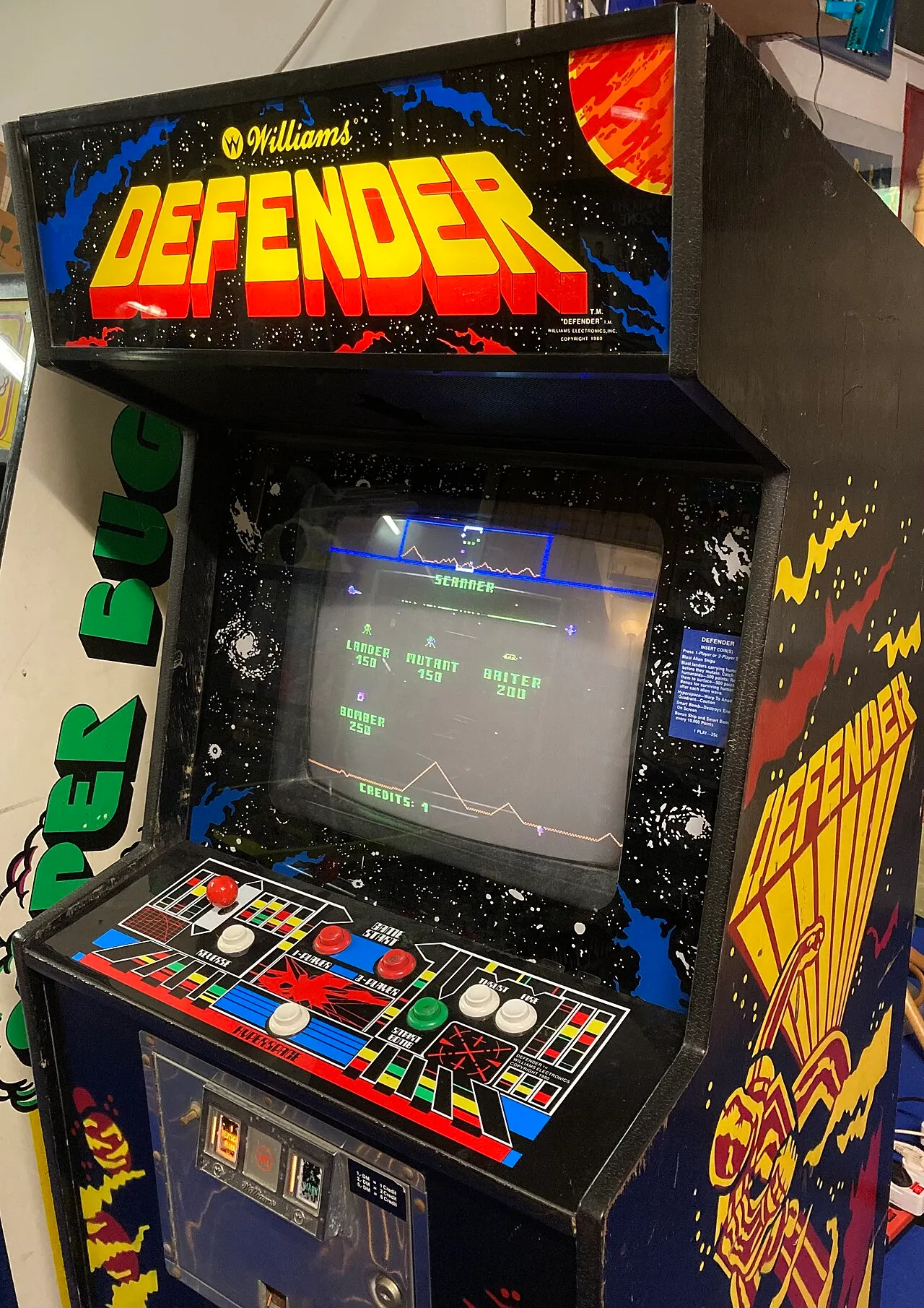
Defender (Williams, 1981). Photo: VMzB, CC BY-SA 4.0.

Back home, the personal computer was just starting to get real games. I started on Zork-style text adventures, where you typed what you wanted to do and imagined the graphics yourself. When games with actual pictures arrived, one stuck: Rescue Raiders. It fed my side-scrolling, flying obsession, but layered strategy on top. It was the first shoot-’em-up I’d played where winning came down to thinking, not how fast you could mash buttons. The storyline was awful. I skipped it and just worked the levels, trying different tactics to beat the enemy.
Better graphics and deeper games came along and pulled me with them. But you don’t forget your first love.
Modern Times
I’ve been a developer since I was eight - BASIC on an Apple II. But I’ve never been a games developer. I had friends who went into the big studios, and that was a life I did not want: chained to a desk sixteen hours a day, crunching toward a release. I figured it would ruin games for me. So I went the other way - business software, embedded work, niche sectors, crypto. That was my bread and butter. I could have the day job and keep gaming as the fun part.
Motivation
Last year my son hit a bored senior year. He’d front-loaded the hard classes, got out around lunch every day, and had nothing to do with the afternoons. So he started tinkering with an online service that might make him a little money. He’d just been through the college application grind and wanted to turn the whole experience - school selection, essays, tracking requirements - into a service for himself and everyone behind him. That became admit.college.
Watching him do that got me thinking about my own work. There’s been a real resurgence of games that put gameplay first instead of chasing photorealism. Minecraft isn’t graphically complicated, but the play is why people keep coming back. It made me think about all the games from my past that were just plain fun, and whether there were new ideas hiding in the old ones.
So I came up with Raid & Rescue.
It’s a modern take on the game I couldn’t put down at twelve: side-scrolling, flying, and - this is the part that matters - you win by out-thinking the other side, not out-clicking them. Built nights and weekends, by a guy who spent a career deliberately not making games.
Under the Hood
For the developers reading: it’s Swift and SpriteKit, no engine. The whole battle is a deterministic simulation ticking 60 times a second - the graphics just watch it. That decision paid off in ways I didn’t expect: I can run thousands of battles headless, no screen, to tune the enemy AI, and the AI itself turned into the most interesting problem in the project. Teaching a computer to lose convincingly on easy and fight dirty on hard is harder than it sounds. Letting the AI teach itself how - that’s the fun part, and a post of its own.

Two AI commanders, thousands of battles a night, and neither one happy about it.
One Tip Before Launch
Your missiles can be shot down. So can theirs. Keep that in mind the first time one comes at you.
Now We Wait
The button has been pressed. While Apple’s review team does its thing: what classic 80s game do you still think about? Tell me - I’m collecting ideas for what comes after this one. More soon.